
Digital Humanities Asia/And Science Hub
Digitization and Visualization of Cultural Heritage in the APAC
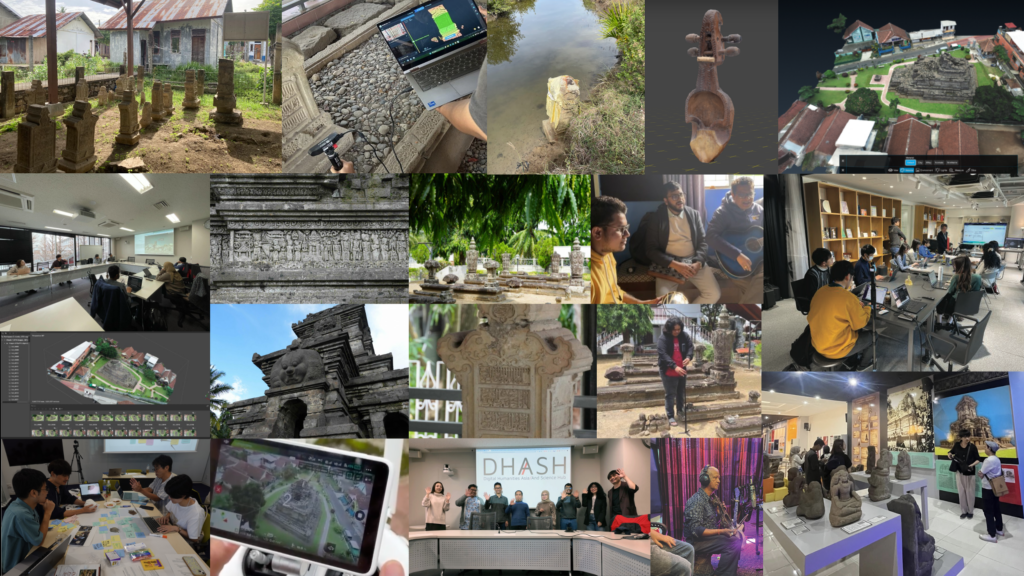
- How can digitization and visualization effectively preserve and disseminate underrepresented cultural heritage in the Asia-Pacific (APAC), countering threats such as physical deterioration and cultural degradation?
- What practical, replicable methodologies using technologies such as 3D photogrammetry, scanning, and modeling can be developed to digitize diverse cultural resources?
- How can generous, human-centered digital interfaces engage diverse audiences—including researchers, students, and the general public—to actively explore and interpret cultural heritage materials?
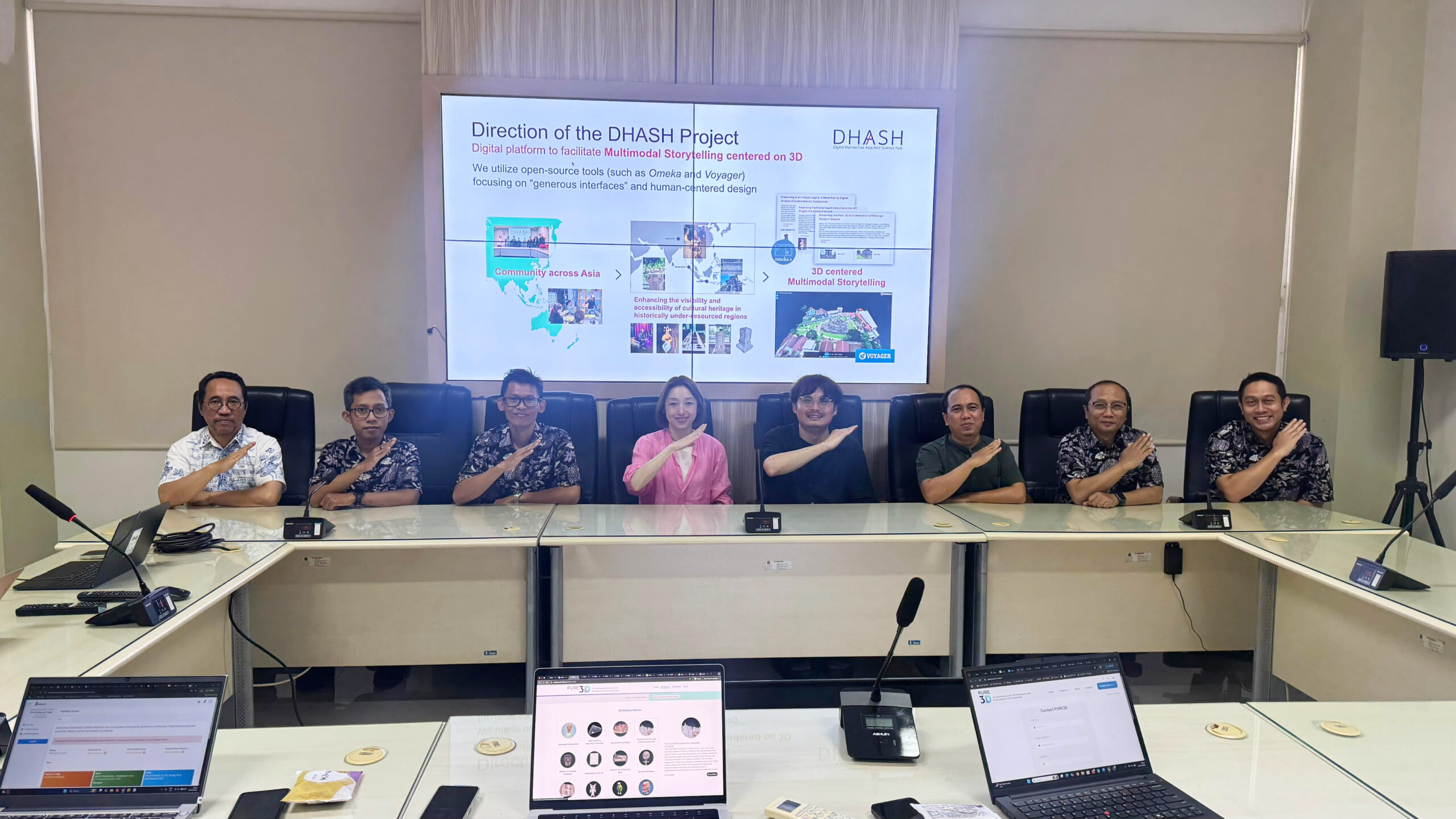
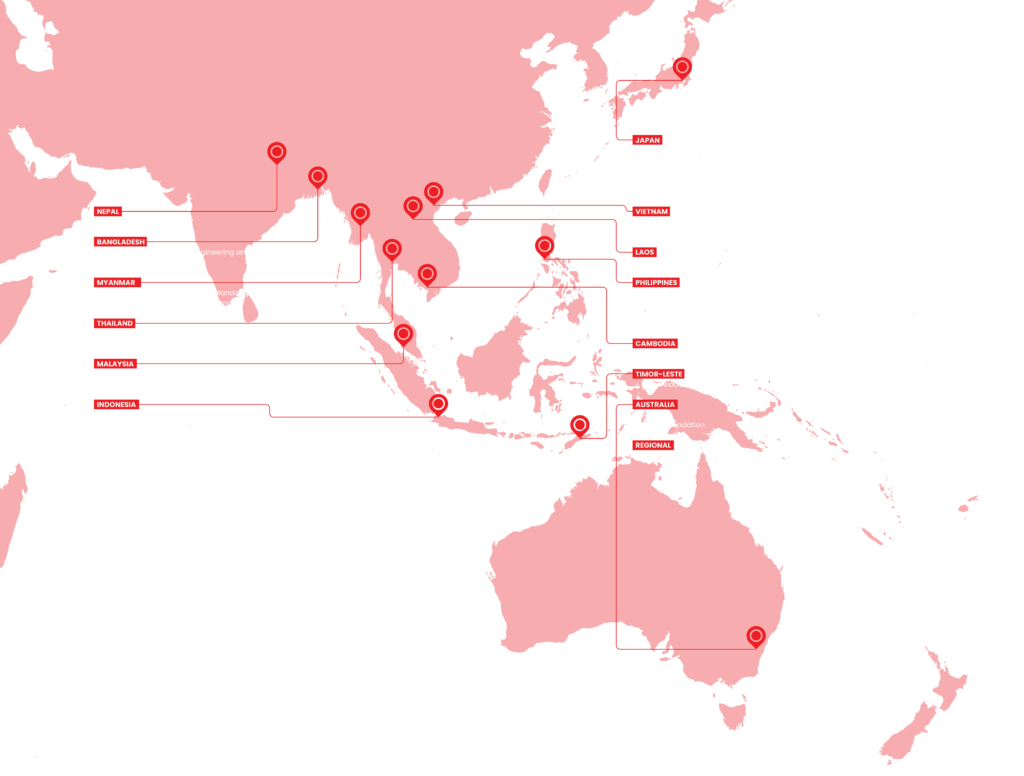
The foundation of the Digital Humanities Asia/And Science Hub (DHASH) project lies in the long-standing collaborative network fostered by the School on the Internet Asia (SOI Asia https://www.soi.asia/ ). Launched in 2001, SOI Asia has grown into a consortium connecting 29 universities and institutions across 13 APAC countries. Initially focused on STEM education and building internet infrastructure, SOI Asia cultivated a culture of cross-border partnership and knowledge sharing.
The DHASH aims to provide a fertile ground for implementing the principles of Open Science (OS), which, as promoted by UNESCO, emphasize “transparency, accessibility, and collaboration” in research. While OS offers great potential, its application in the humanities, particularly in diverse, non-Western contexts, faces hurdles. Challenges include adapting standardized frameworks to diverse data types, ensuring multilingual support, and navigating complex ethical considerations.
It is at this intersection—the collaborative network of SOI Asia and the principles of OS that the DHASH project emerged, aiming to build a community-centric OS infrastructure for Digital Humanities in the APAC region.